Koipedia
Koi Variety Guide
Explore the major varieties of Nishikigoi — their origins, identifying traits, care requirements, and specific nutritional needs for peak health and colour expression.
Group
Care Level
Showing 12 of 12 varieties
Gosanke
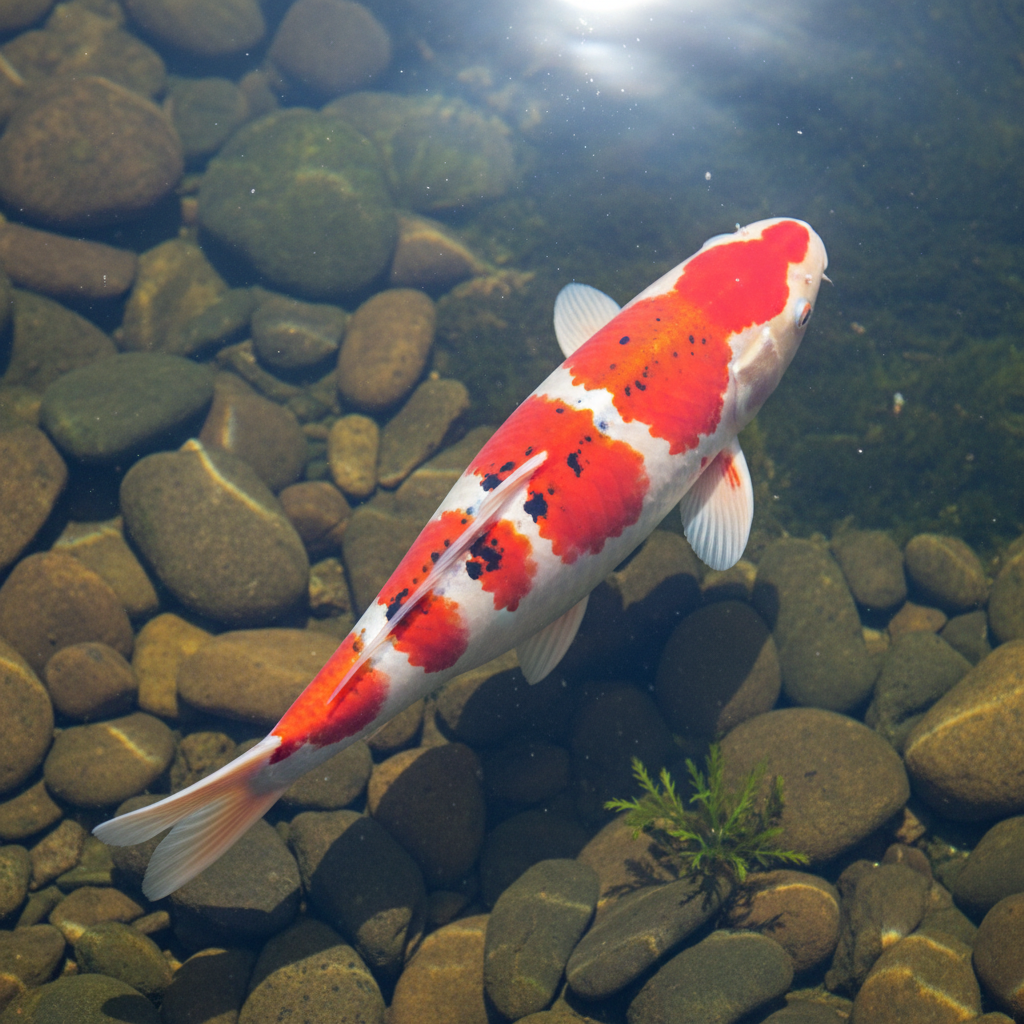
Kohaku
紅白
The most iconic and celebrated koi variety. Kohaku has a snow-white (Shiro) body with red (Hi) patterns. It is the cornerstone of the hobby and the benchmark against which all koi are judged. The expression 'It begins and ends with Kohaku' reflects its central place in koi keeping.
Identifying Traits
- Pure white base (Shiro)
- Bright red Hi markings
- Sharp, well-defined pattern edges (Kiwa)
- No markings on fins
Gosanke
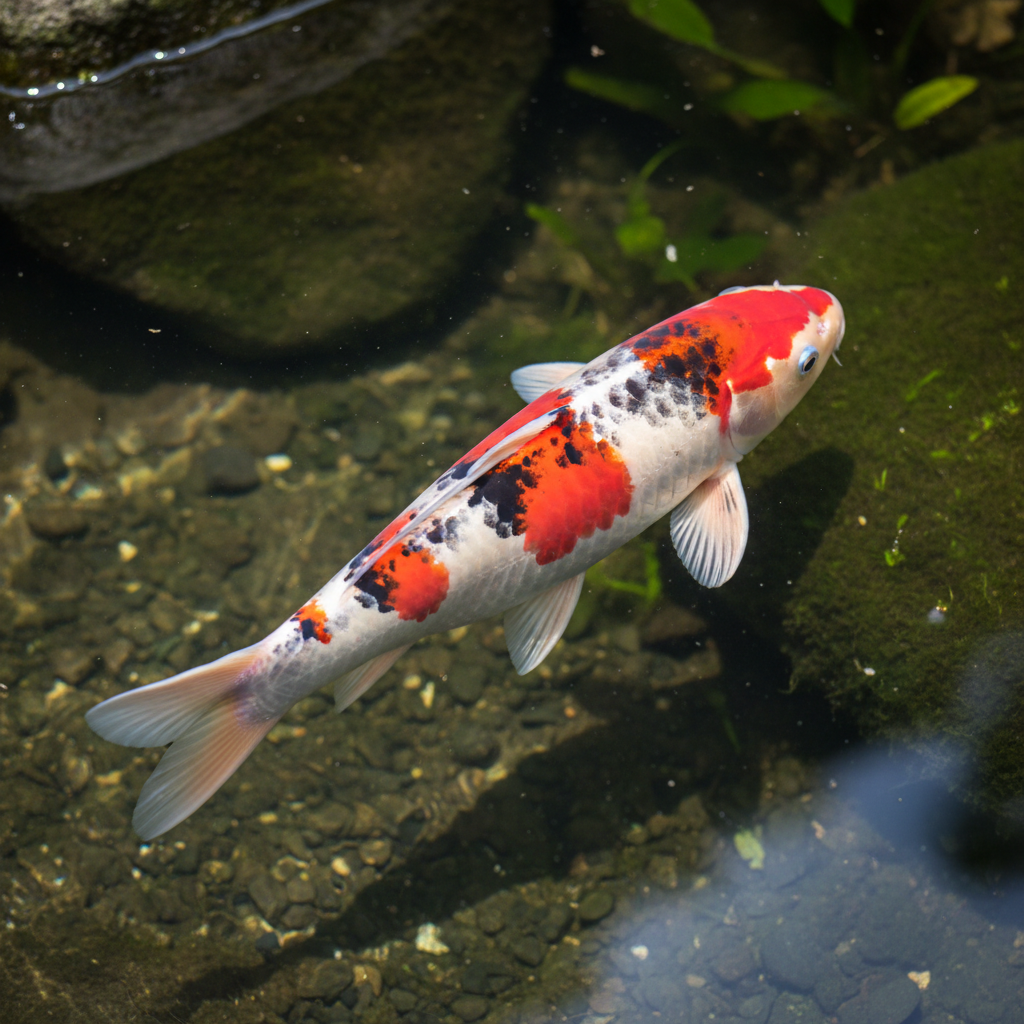
Taisho Sanke
大正三色
Sanke features the same white base and red pattern as Kohaku but with the addition of black (Sumi) markings. Sumi should appear only on the body, never on the head. A classic three-colour koi often called simply 'Sanke'.
Identifying Traits
- White base (Shiro)
- Red Hi pattern
- Black Sumi markings on body only
- Clean, ink-like Sumi
Gosanke
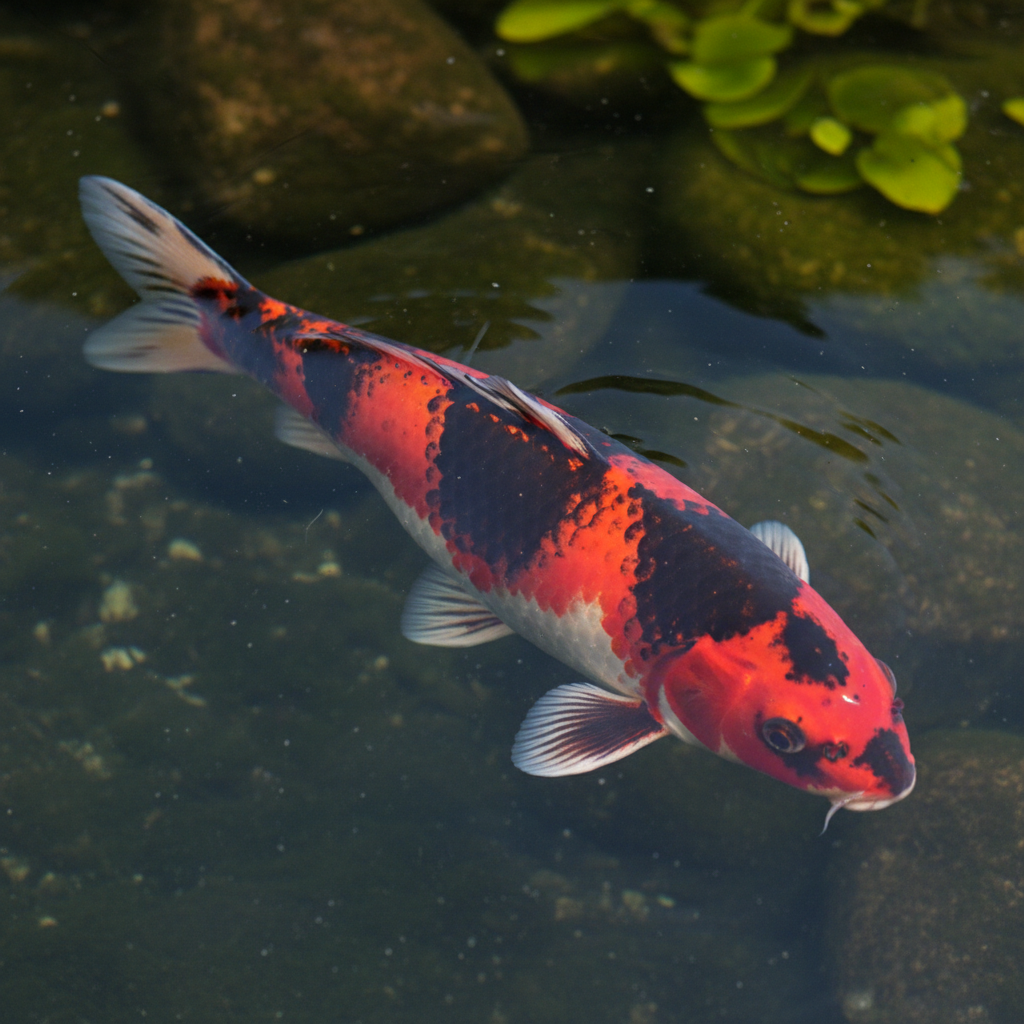
Showa Sanshoku
昭和三色
Showa is distinguished from Sanke by its black (Sumi) base — the whole body is wrapped in Sumi, with white and red appearing as colour patches over it. The Sumi wraps around the body and appears on the head, creating a bold, dramatic appearance.
Identifying Traits
- Black (Sumi) base throughout
- Sumi on the head
- Motoguro (black at fin base)
- Bold, wrap-around pattern
Utsurimono
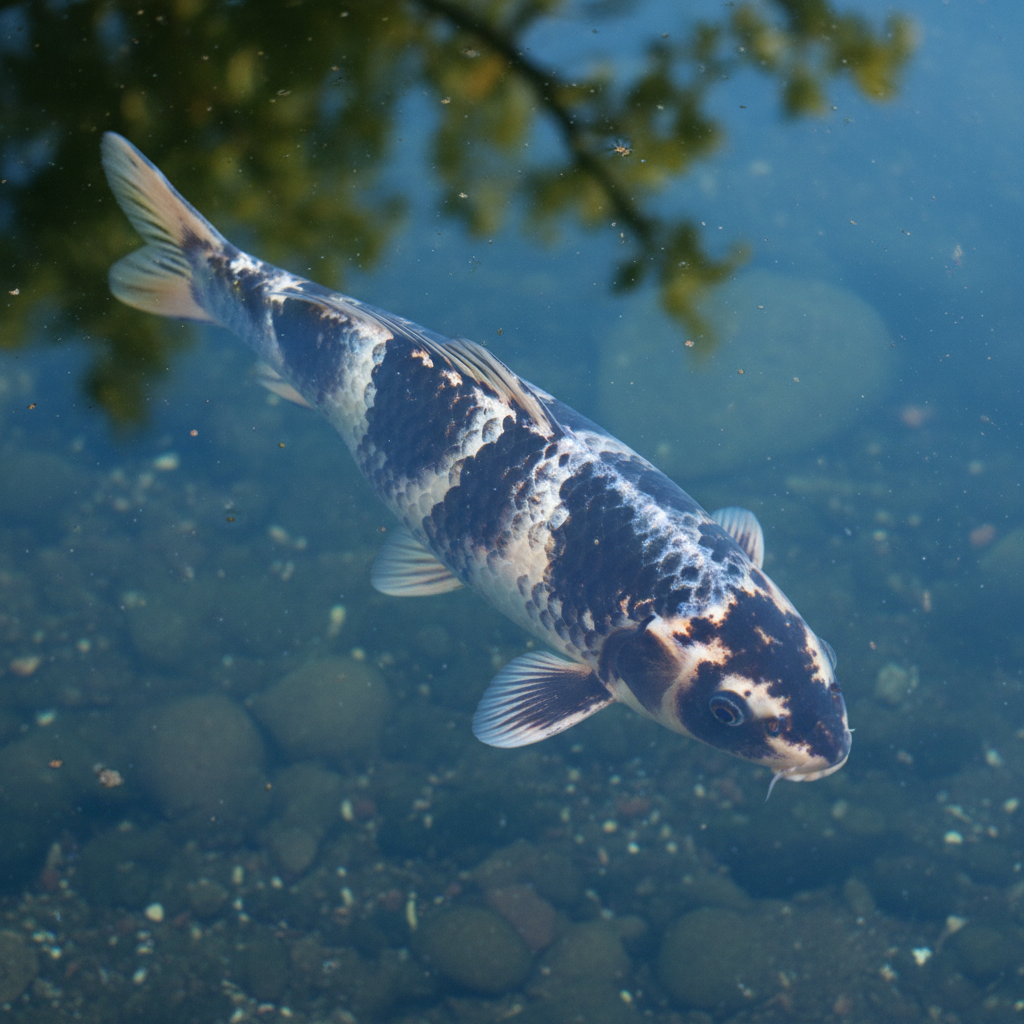
Utsuri
写り
Utsuri means 'reflection' in Japanese. These koi have a black base with either white (Shiro Utsuri), red (Hi Utsuri), or yellow (Ki Utsuri) markings. They are bold, graphic fish with a striking two-tone appearance. Shiro Utsuri is the most popular variety.
Identifying Traits
- Black Sumi base
- Motoguro (black at fin joints)
- Sumi on head
- Two-colour contrast
Asagi / Shusui
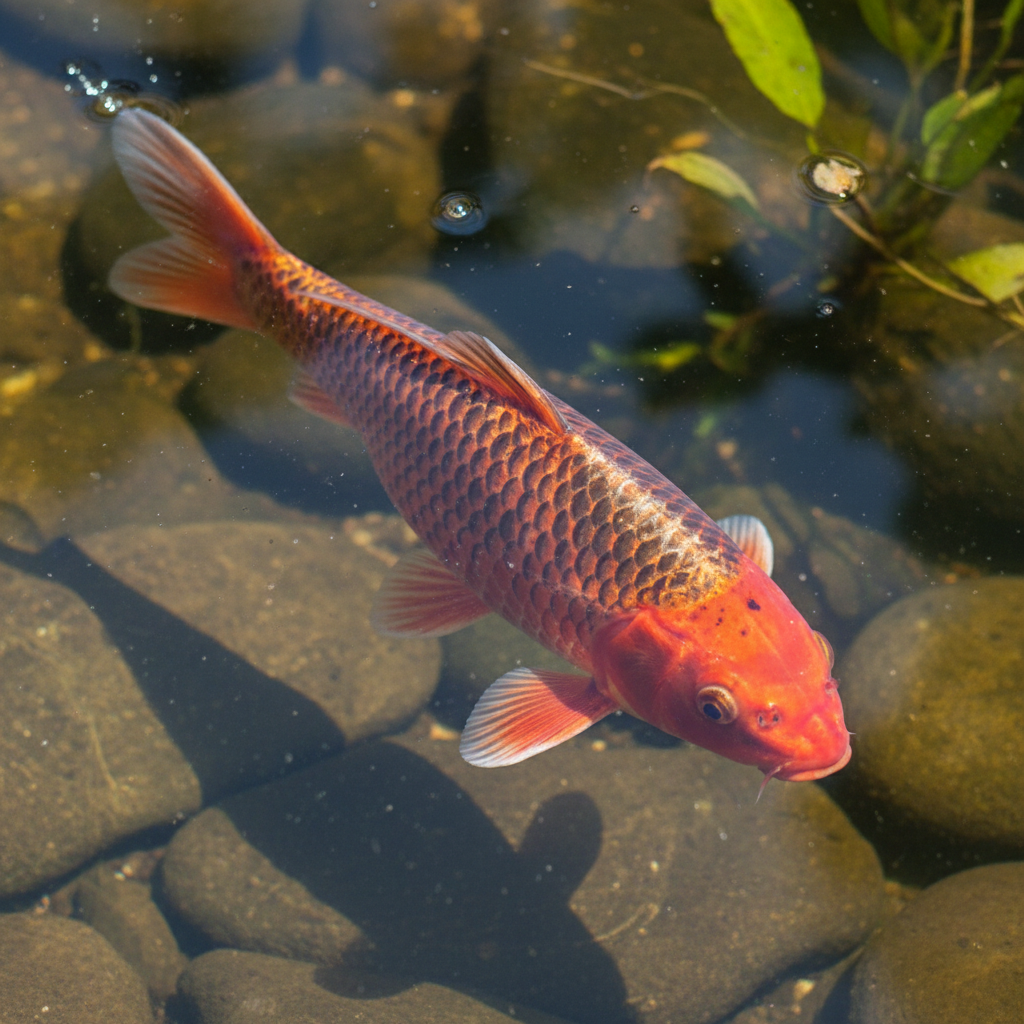
Asagi
浅葱
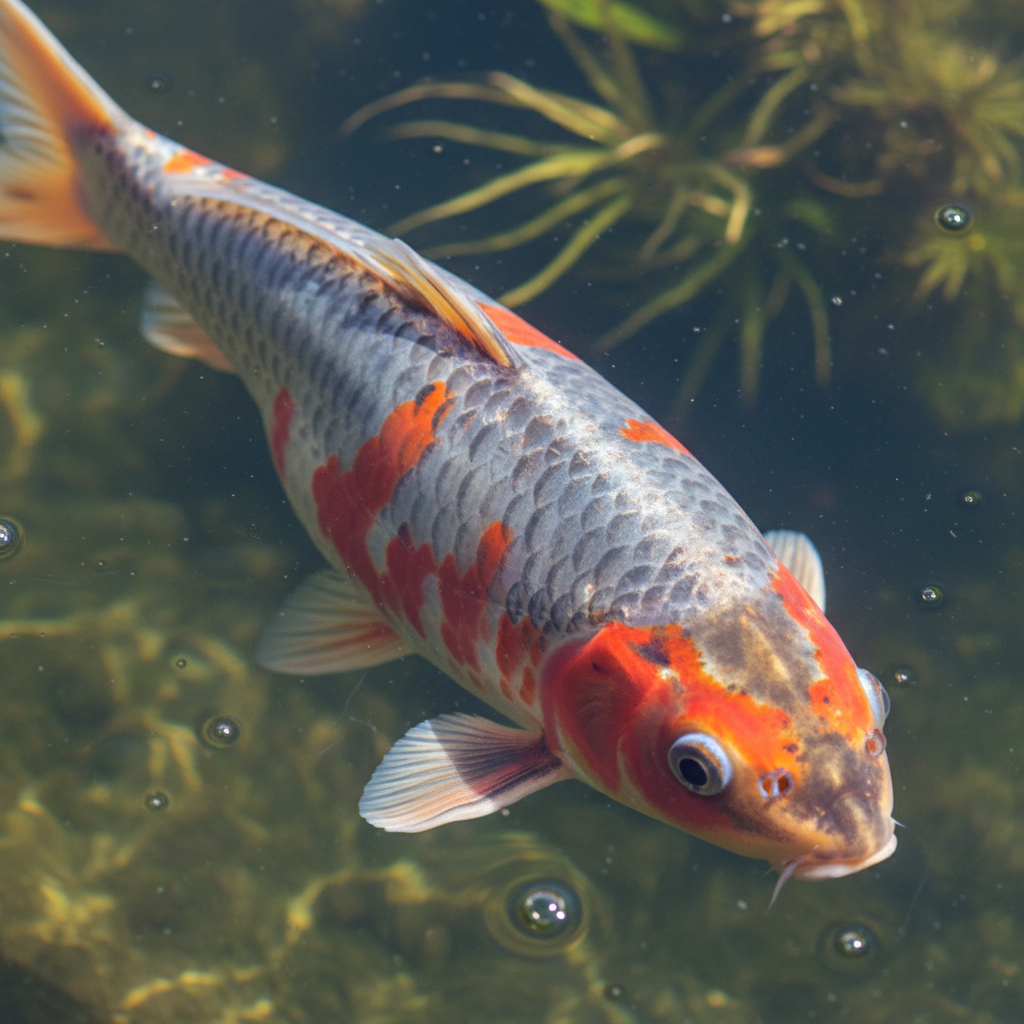
Asagi is one of the oldest koi varieties, believed to be an ancestor of modern koi. It features a beautiful blue-grey net (Reticulated) scale pattern on the back, with red (Hi) on the belly, cheeks, and fin joints. A serene, natural-looking fish.
Identifying Traits
- Reticulated (net) scale pattern in blue/grey
- Hi on belly, fins, and cheeks
- Light blue head
- No pattern on head
Asagi / Shusui
Shusui
秋翠
Shusui is the Doitsu (German-scaled) version of Asagi, created in 1910 by crossing Asagi with Doitsu carp. It lacks the reticulated scales and instead has a row of mirror scales along the dorsal line. The back is a serene pale blue with vibrant red on the sides and belly.
Identifying Traits
- Doitsu (no body scales)
- Row of mirror scales along dorsal
- Blue back, red flanks
- Pale blue head
Bekko
Bekko
別甲
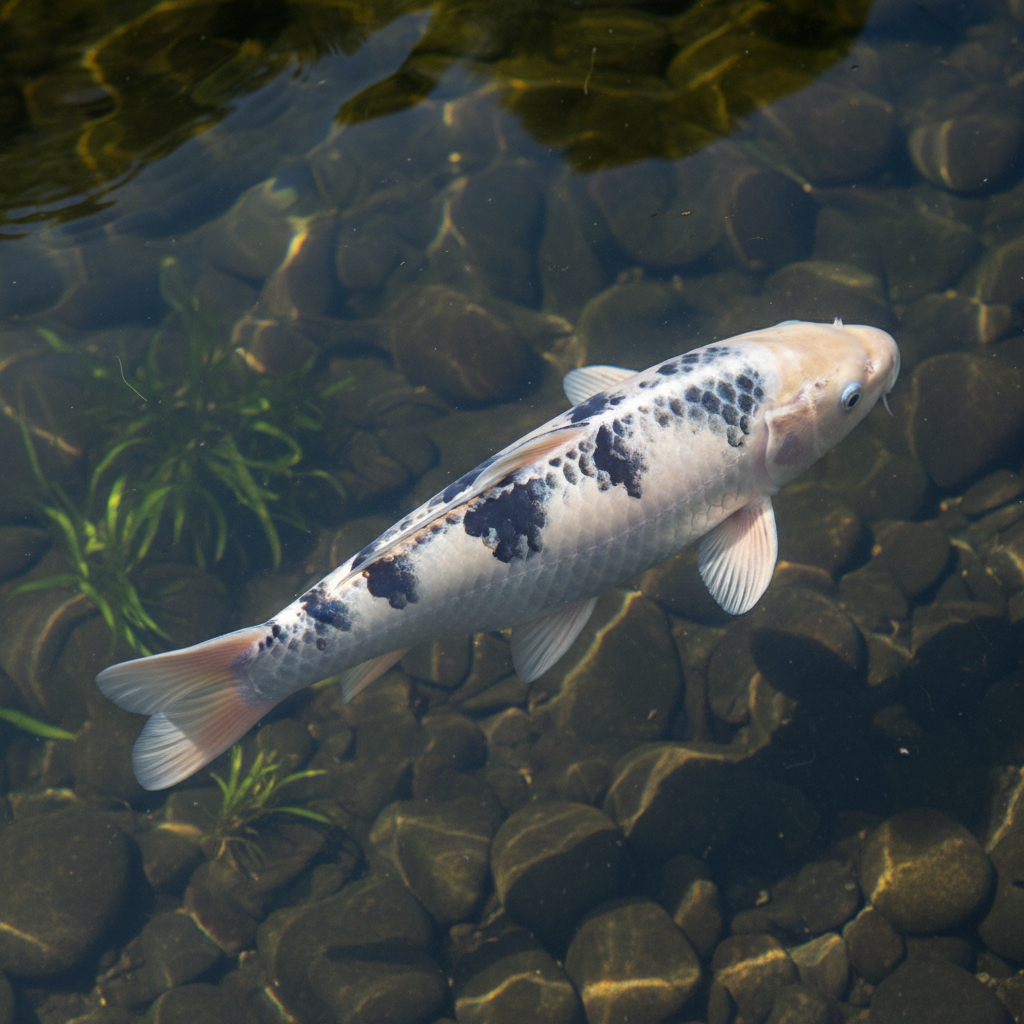
Bekko ('tortoiseshell') features a solid white (Shiro Bekko), red (Aka Bekko), or yellow (Ki Bekko) base with black Sumi markings. Unlike Utsuri, Bekko has no Sumi on the head. They are clean, elegant fish often described as simplified versions of Gosanke.
Identifying Traits
- Clean, single-colour base
- Black Sumi spots on body
- No Sumi on head (distinguishes from Utsuri)
- Clear, distinct markings
Tancho
Tancho
丹頂
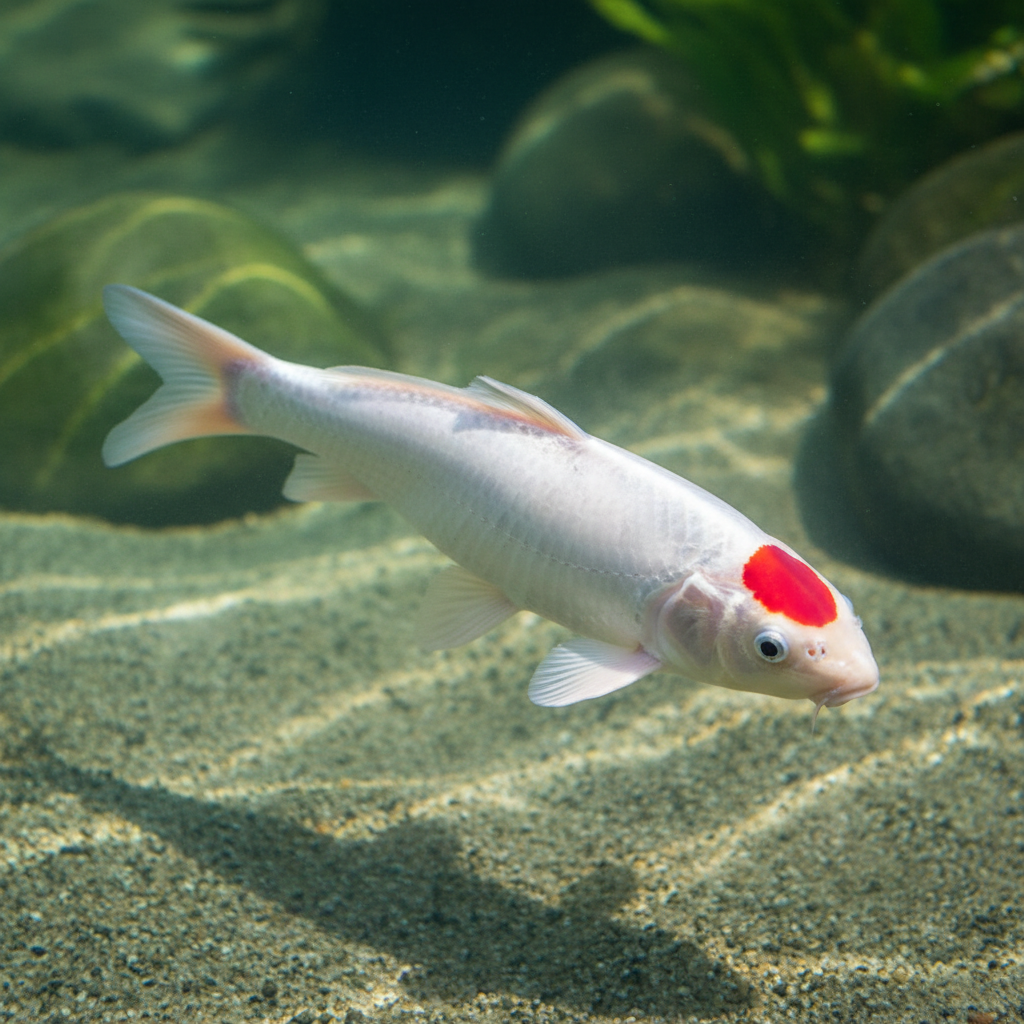
Tancho is named after the Tancho crane, Japan's national bird, which has a red spot on its head. A true Tancho has a pure white body with a single, perfectly round red spot (Hi) on the head — and nothing else. This is the epitome of minimalist Japanese aesthetics in koi keeping.
Identifying Traits
- Pure white body (Shiro)
- Single round Hi spot on head
- No other markings anywhere
- Perfectly circular Hi is most prized
Hikari Muji
Ogon
黄金
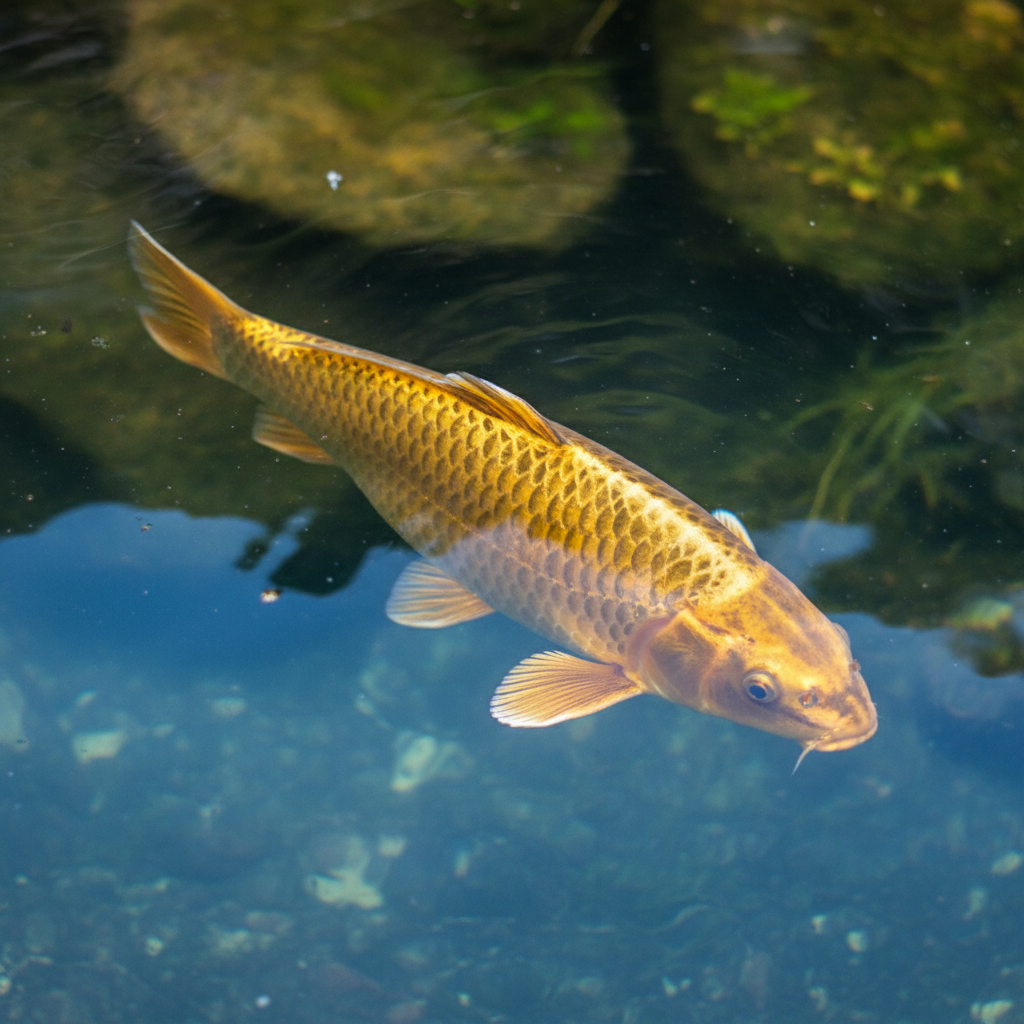
Ogon means 'gold' in Japanese. These single-coloured metallic koi are among the most popular for beginners due to their hardy nature and striking appearance. Varieties include Yamabuki Ogon (yellow-gold), Platinum Ogon (silver-white), and Orenji Ogon (orange).
Identifying Traits
- Solid metallic lustre
- Single colour throughout
- Highly reflective scales
- Bold, clean appearance
Specialty
Butterfly Koi
蝶鯉
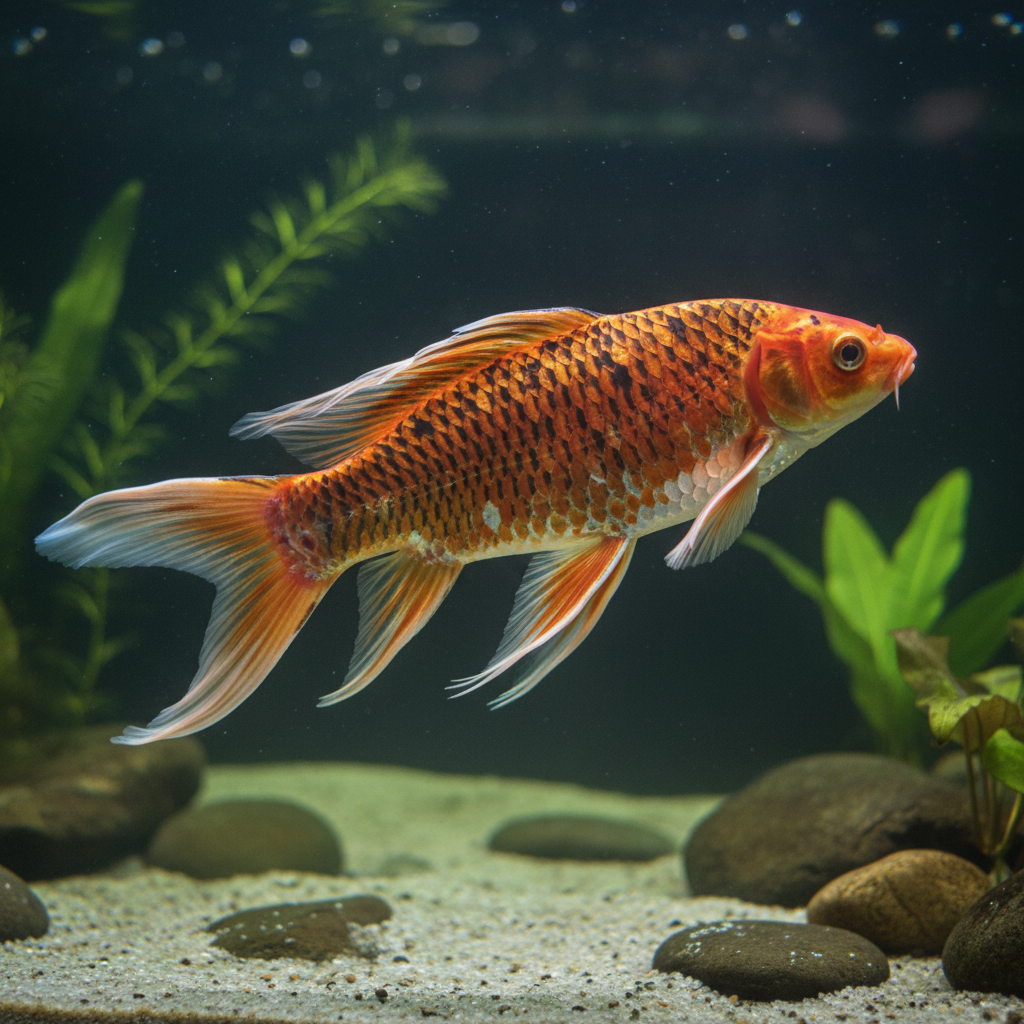
Butterfly Koi (also called Dragon Carp or Longfin Koi) are distinguished by their long, flowing fins that trail elegantly in the water. They were developed in the 1980s by crossing traditional Nishikigoi with Indonesian long-finned carp. They can display any of the classic koi patterns.
Identifying Traits
- Long, flowing fins and tail
- Any koi colour pattern possible
- Generally slower swimmers
- More susceptible to fin damage
Kawarimono
Kumonryu
九紋龍
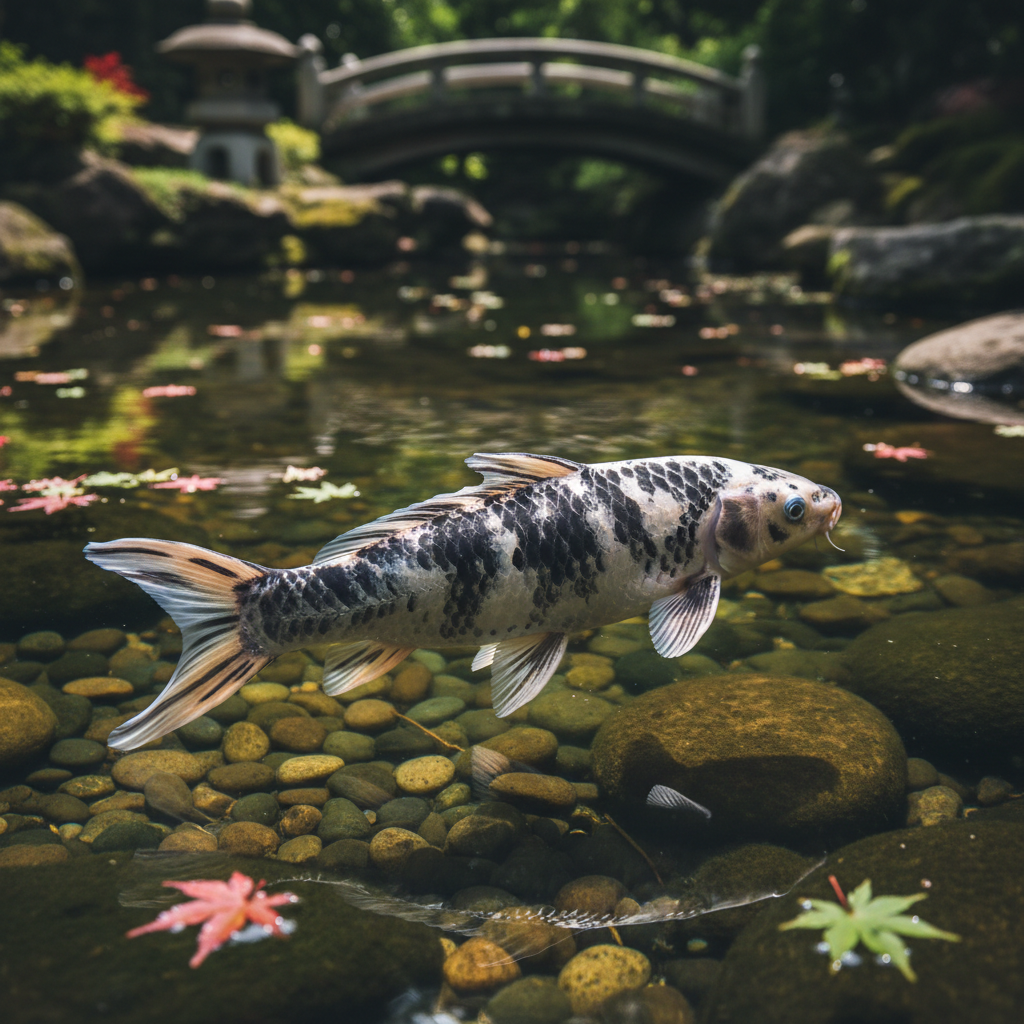
Kumonryu means 'Nine-crested Dragon' — a name reflecting its fluid, dragon-like appearance. This Doitsu (scaleless) koi has a black and white pattern that is famously unstable, changing dramatically with water temperature and season. No two sightings of the same fish look identical over time.
Identifying Traits
- Doitsu (scaleless)
- Black and white only
- Pattern changes with temperature / season
- Unpredictable, dynamic appearance
Kawarimono
Goshiki
五色
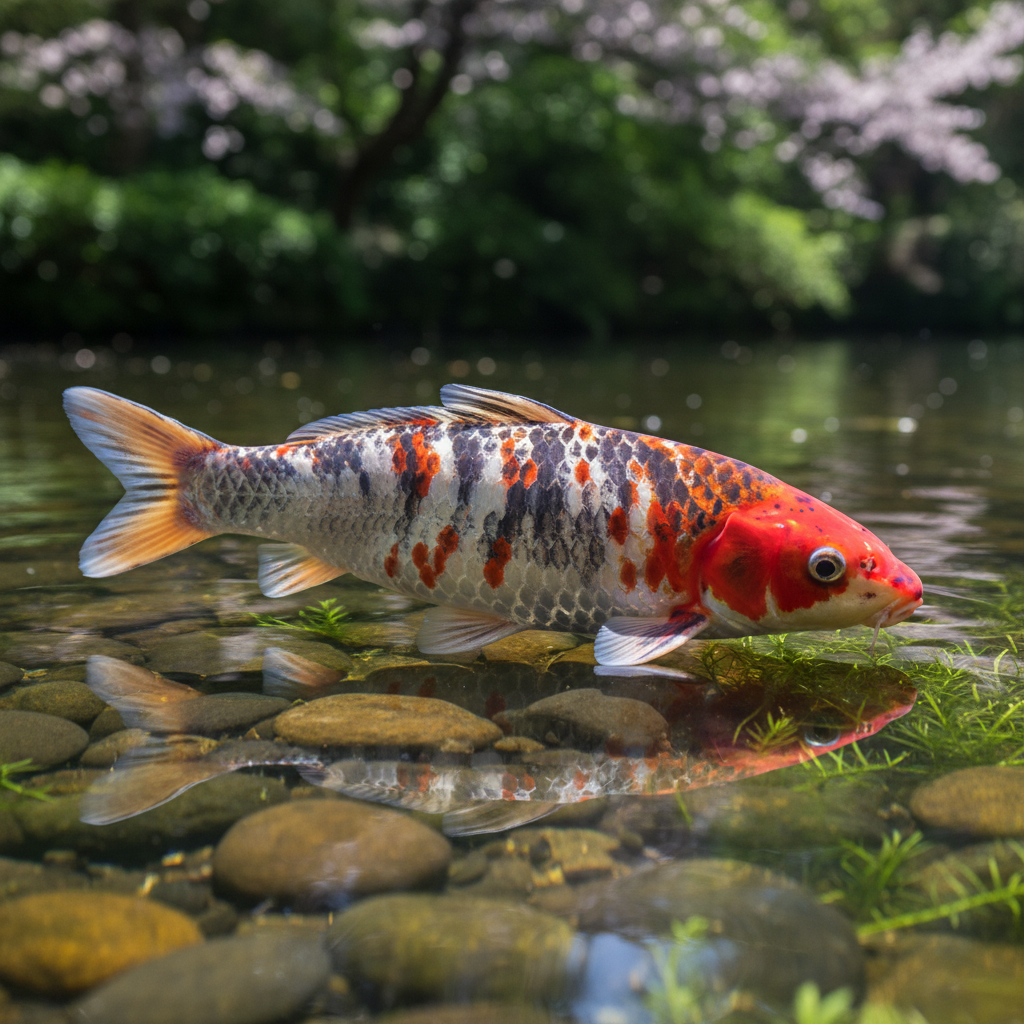
Goshiki means 'five colours' — a stunning koi that displays white, red, black, light blue, and dark blue in its intricate pattern. It looks like a Kohaku wearing a net of dark scales. The blue reticulation over the Hi and Shiro creates a marbled, jewel-like appearance.
Identifying Traits
- Five distinct colours
- Dark reticulated net pattern over body
- Red Hi on white base
- Blue/black shading throughout
Nutritional requirements are general guidelines based on species research. Individual ponds and fish may vary — always observe your koi's behaviour and adjust accordingly.